


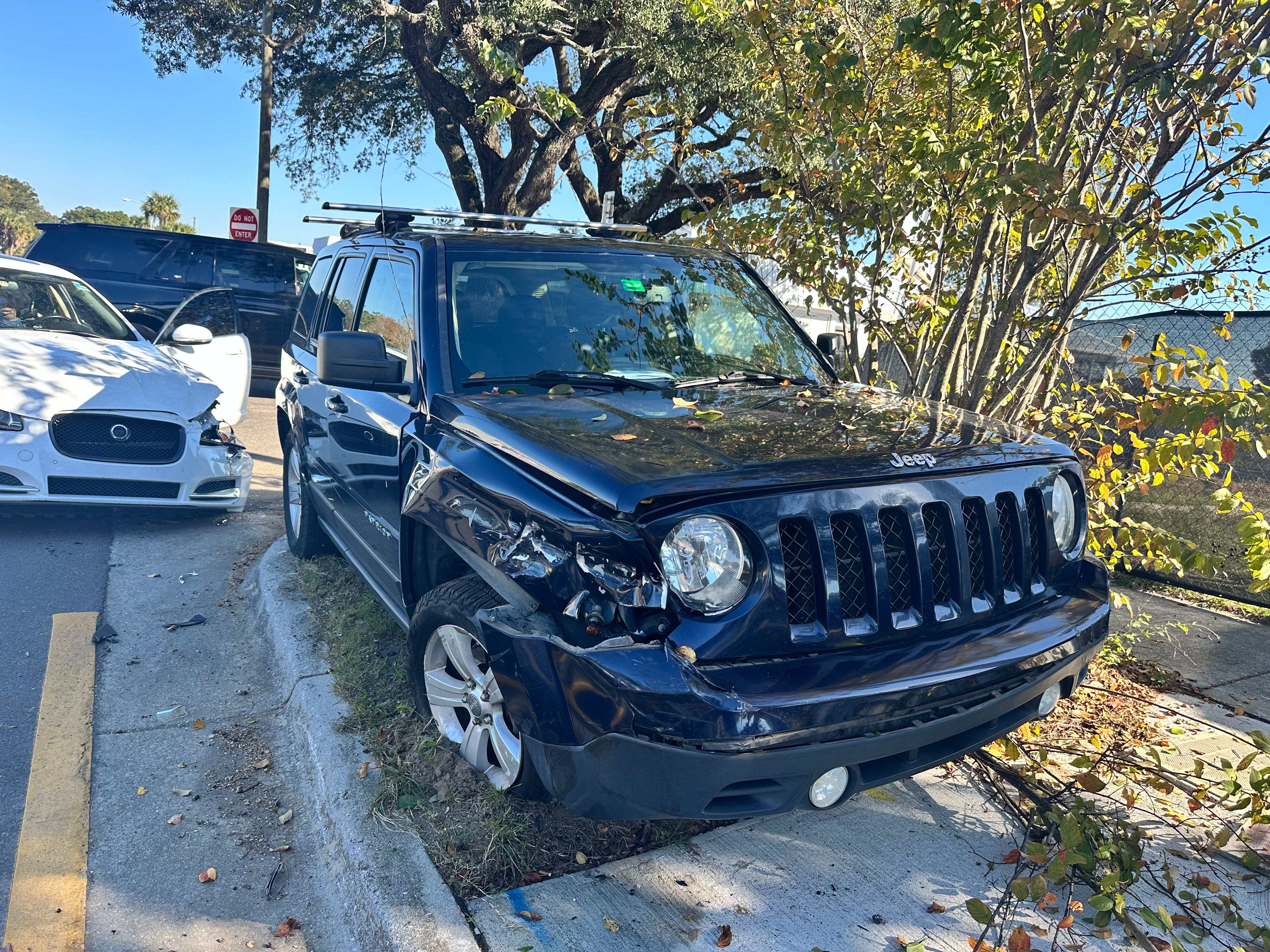
A couple of weeks ago, my family and I got in a car wreck. We were driving into town on a 3-lane one-way road in the left lane, when a white sedan in the middle lane suddenly turned left in front of me to go onto a cross street.
The front corner of our jeep smashed into the front corner of the white car, and up we went.
Being in a car wreck that you can’t really avoid is an interesting experience, and it is psychically altering in the way you interact with the road.
If you’re a good driver, you’ll most likely have never been the driver in a wreck. At the same time, you know in the abstract that no matter how good you are, you can’t control how other people on the road drive.
But once you experience a wreck caused by someone else, it becomes concrete just how out-of-nowhere another bad driver out there could ruin your day, week, month, year, life.
People barrel through red lights. They go straight past stop signs. They drive on shoulders to pass others.
All the iron rules of the road are always mere suggestion, surrendered to anarchy the moment someone has a bad day, is a bit tired, has had a bit too much to drink, is texting on their phone, is having an episode of dementia.
It is a bit unnerving how the rules designed to keep everyone safe are always a thin veneer that fall apart for everyone else as soon as any participant defects.
In our wreck, there was a brief moment where I knew the wreck was about to happen, but had little I could do about it. I could only feel a bit of frustration at the idiotic move the person in front of me was doing as I shifted my foot to slam the brake.
The passenger side of our car went up in the air. While we rolled on our left 2 wheels with our right two wheels airborne, my wife was screaming. My oldest (7), sitting behind her was dead silent. My youngest (4), sitting behind me, was also dead silent. The oldest would later say she was silent because she was so terrified she couldn’t speak, and the youngest would say she wasn’t scared at all.
We went up onto a curb, hit a small tree, and came to a stop with both wheels back on Earth.
The other guy got out of his car and said he’s a delivery driver. His app told him to turn left, so he simply turned left, and there we were.
There are 6 million reported car wrecks in the United States every year. In those wrecks, 10-11 million cars are involved. Out of ~290 million legal vehicles, nearly 1 in 26 of them will be in a wreck in any given year. Nearly 4% of cars.
Turns out those are pretty high odds! In all of these accidents, over 2 million people are injured, and 40,000 people are killed every year, in just the U.S. alone.
Anyway, both cars in the wreck were totaled, and I had to look for a different car. Every beater car I’ve had for the past decade has exploded, so I thought it was time to try something newer. This had me thinking about Full-Self-Driving (FSD) cars.
There was a lot of buzz online about the latest versions of FSD on the Teslas, and I thought maybe it was worth looking at again. I had test driven a Tesla a couple of years ago, and it was already almost entirely driving itself at that time. They had the option to borrow the car for 24 hours to test drive it for free so I decided to give it a spin.
99% of that time I let the car fully drive itself all over town in complicated and busy driving situations. I didn’t touch the steering wheel or pedals at all; only put in a destination on the navigation and press the “Full Self Driving” button.
It handled perfectly. Tesla had a leasing deal going on, so I decided to go ahead and lease one of these vehicles.
A flurry of ideas have come to me about the way our future will shape up with FSD vehicles everywhere. I first started writing about FSD vehicles 10 years ago, but I feel it’s urgent to revisit them now because they are about to be everywhere, and much, much faster than 99% of people can possibly expect.
Self driving cars have always been one of those things that’s “out there”. A ways away. Just Google’s Waymo taxis. And Google only has a few of those taxis, and they only operate in a handful of cities. And it’ll take them years to scale out.
That’s not the case anymore, and it’s clear to me why Tesla is doing what they’re doing. I believe their plan is as follows:
Offer great lease deals to put as many Teslas with AI4 (latest self-driving computer chip) on the road as possible
Launch Robotaxi network where tesla owners can join
Offer their own Tesla car insurance for if you decide to put your tesla on the Robotaxi network at a better rate than legacy insurance would ever offer for something they perceive as high risk
Offer lease holders the option to join and for miles incurred on the Robotaxi network to not count against lease mileage limits
Tesla now has the Instant largest autonomous taxi network in the world
There are already over 1.6 million Teslas with AI4 chips on the road in the U.S. To be able to activate a network like that for robotaxi purposes will be rapidly transformational.
I started thinking a lot about the kinds of shifts we will expect to see. I already see people wishing they could send their Tesla across town to deliver something to a family member. While giving a friend a ride home the other night, I was wishing I could just make my driver seat turn around so it’d be easier to face and speak with them in the back seat. Driving can become a much more communal activity.
I believe there will be large changes to social interaction too. Many people today simply don’t go out much because they’re tired, or they know they will get tired and have to drive back hone while tired, and thus choosing not to go out at all.
With FSD, the equation completely changes. There’s a paradox known as Jevon’s paradox that when something becomes more efficient, demand for it actually increases. It applies here: where the mental-energy cost of driving drops significantly, people are likely to do more of it. They will go to more events, knowing they don’t have to drive home while drowsy or needing to call an expensive cab.
It’s similar to how every time airline travel becomes cheaper, endlessly more people book their tickets to travel all over the world, greater distances than most of their ancestors traveled in a lifetime.
To that end, I foresee there will be a huge boom in drunk driving, or driving while high, or tripping on mushrooms, or sleeping, or looking at their phones, or really any impairment. The cost of impaired driving drops significantly, and it is likely people will do much more of it.
Through FSD, everyone in the U.S. is getting access to their own metro system, except it’s running directly on the roads, and you probably don’t need to worry about anyone doing something crazy to you in the comfort of your car.
Some of the friends I speak to about this protest that they enjoy driving and wouldn’t want FSD. I enjoy driving too, but I have a few interesting observations to note from using it.
Firstly, FSD really does conserve mental energy. Regular driving – particularly in cities and suburbs – requires full alertness. This is taxing on the mind. I notice that I’m less tired after a drive now, simply being an overseer.
Second, you realize just how bad of a driver everyone is. Because you’re less focused on your own literal immediate survival, you have more space to observe the driving quality of others on the road. Seeing how common others errors are in this way, it becomes immediately clear why 15 million people in the U.S. alone are in a car wreck (when counting the passengers as well).
And third, you have more time to think or handle things in general. Musk openly stated today that you can now use your phone while using the latest FSD and it won’t nag you to pay attention while road conditions are good. People are going to use that a lot, and those who do so with intention will probably get a lot more done.
I also suspect that choosing to drive manually will soon become a lifestyle choice, because it will actually become more expensive. Aside from the greater risk, you can expect that car insurance companies will begin charging more for people who refuse to use FSD:
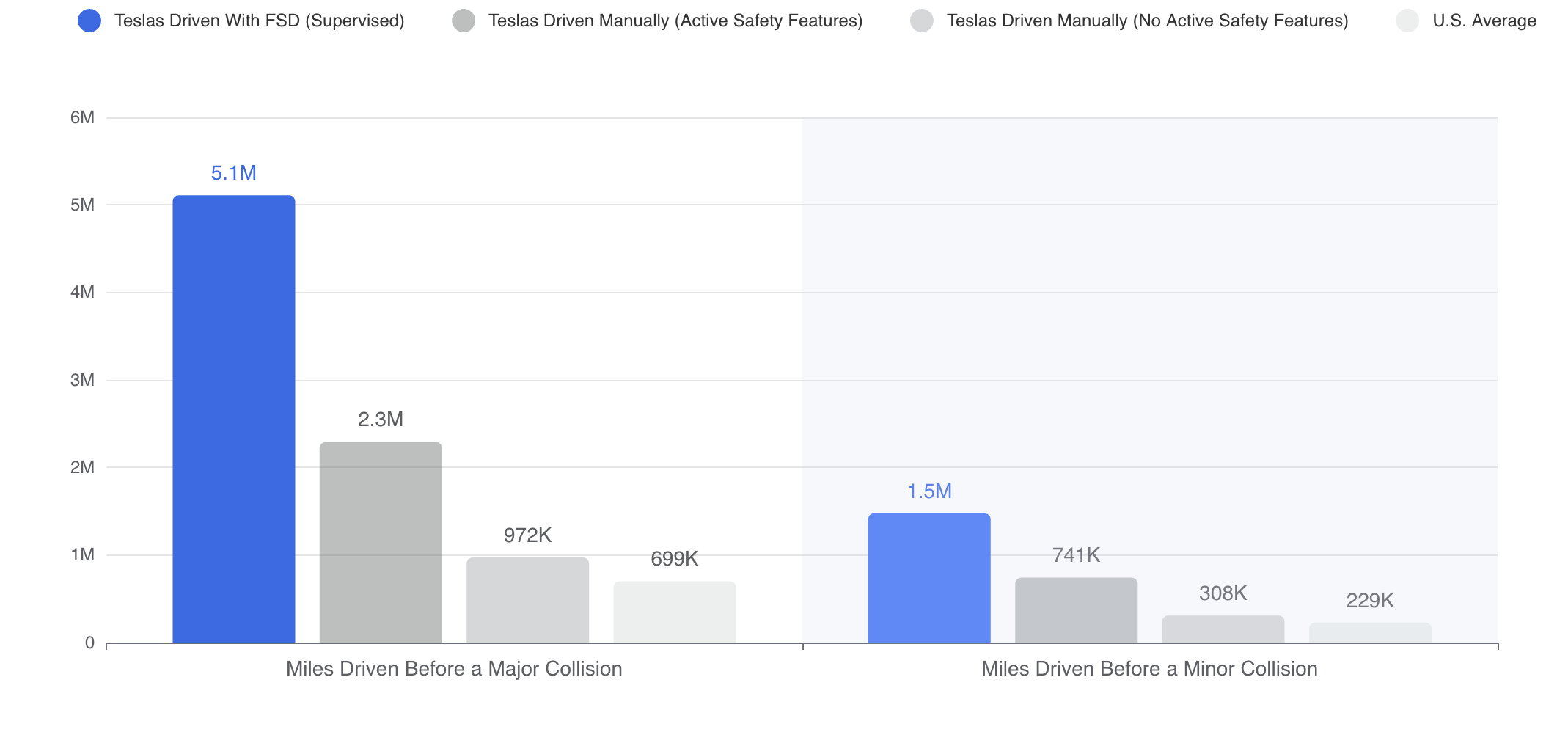
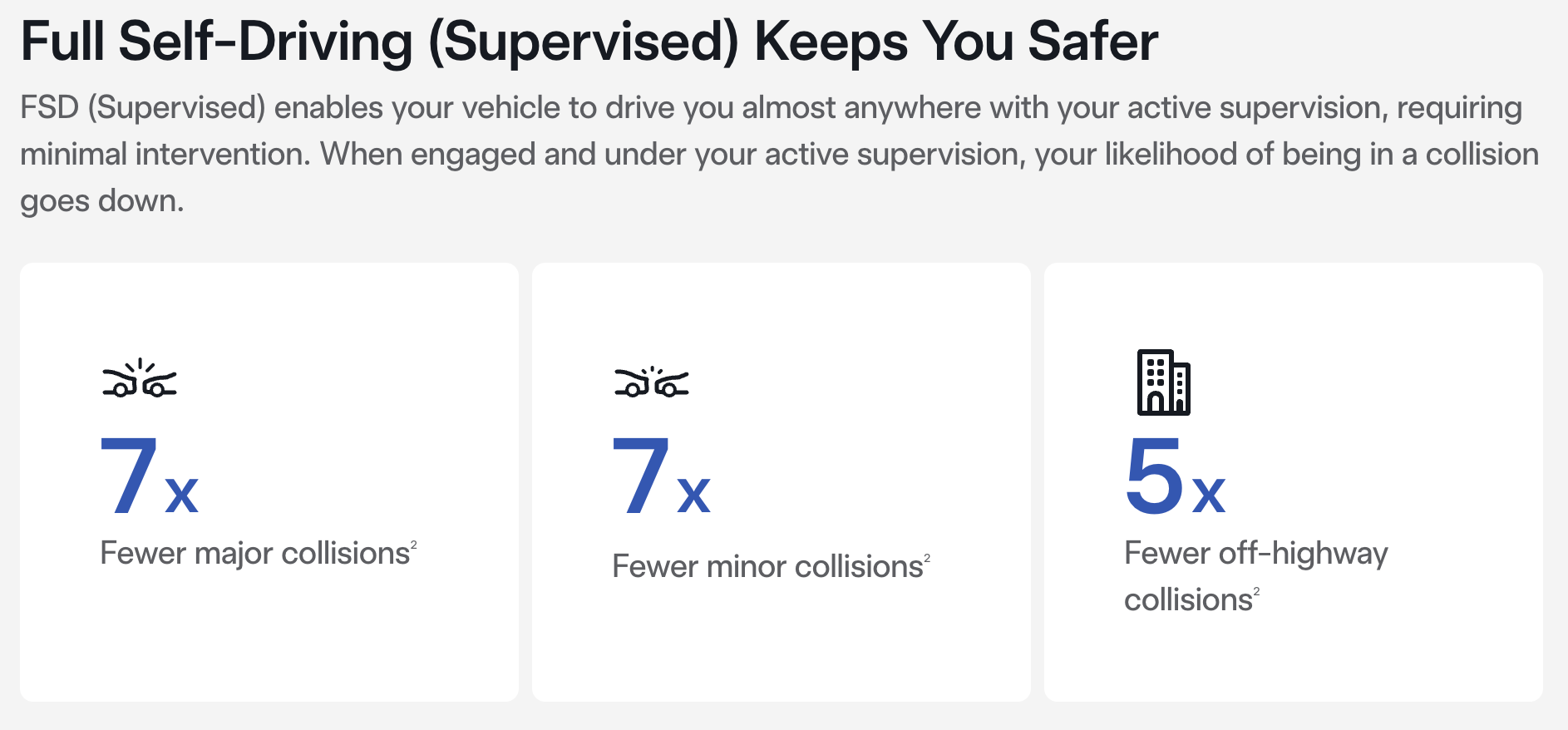
The statistics speak for themselves, and the actuaries of these companies will eventually make sure those who are taking on more risk are billed for it.
Ultimately, I don’t think it’s a bad thing. What FSD fundamentally does, is unravel the tightly bound ways we have structured American society around The Car and its subtle costs – costs that were ignored because we always had to as a matter of survival. This unraveling will basically reveal an answer to the question of “What would America have looked like if it built a functioning public transportation system?”
There’s another reason to embrace FSD at this time as well: flying cars are coming. When flying cars do arrive, you have to ask yourself:
Do you want to be flying around sharing the sky with a bunch of idiots who barely even know how to drive when they’re on the ground, or would you prefer that everyone let the robot take the wheel?